GOVERNED DECISIONS, AT MACHINE SPEED
AGENTIC SOC TURNS SECURITY DATA INTO GOVERNED DECISIONS
Anomali is the Agentic SOC where every action an agent takes is one your regulator, your Board, and your night shift would each stand behind. Made at machine speed, defensible by design.
Unify data. Ground decisions in operational intelligence. Govern by policy. Execute at machine speed.
Trusted by enterprise security teams and public-sector organizations to turn intelligence into action.
Backed by Google Ventures, General Catalyst, and IVP. 400+ enterprise customers across financial services, critical infrastructure, government, and national defense.







Your SOC was built to collect alerts, not make decisions
Security teams have more telemetry, tools, and AI initiatives than ever. But the underlying data remains fragmented, noisy, and disconnected from the intelligence needed to act. Adding AI on top of that foundation only makes weak decisions faster. An estimated 95% of enterprise AI initiatives underperform or fail because of unclean, unstructured, or context-poor data. Agents without intelligence are useless.
Attackers now move at machine speed
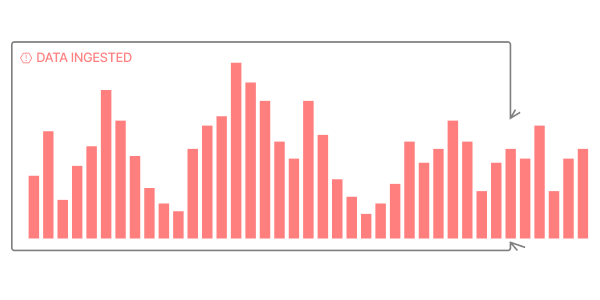
The fastest quartile of intrusions reached exfiltration in 72 minutes in 2025, down from 285 minutes in 2024.


Too many tools, too little shared context
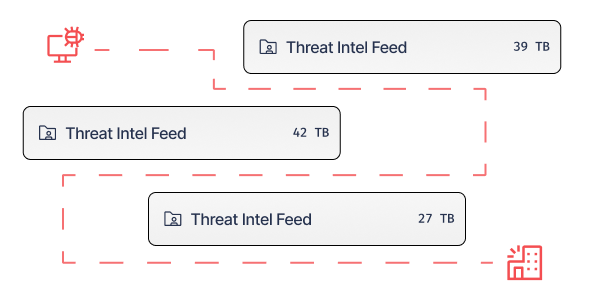
69% of enterprises run 10 or more detection and response tools, and 72% say security and IT data are siloed enough to slow response.
Analysts buried in false positives
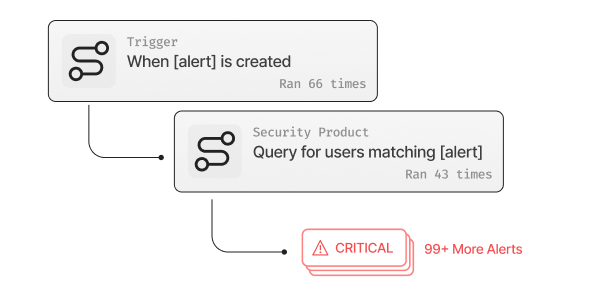
174 alerts per analyst per day, only 22% worth a real investigation. 52% of analyst time goes to false positives, and 71% of analysts report burnout.
Anomali works with the SIEM, EDR, cloud, identity, email, and SOC tools you already own. Start with the SIEM you have. Retire it when the Intelligent Unification Layer (IUL) Maturity Model says you're ready.

One intelligence-fused foundation
From signal to governed action
Threat intel meant a hand-curated feed. Managed Intelligence as a Service runs it now, the foundation everything builds on.The Agentic SOC Platform builds on top. AURA (Anomali Unified Response Agent) triages, investigates, and recommends, with approval thresholds, rollback, and an audit trail. Both run on the Intelligent Unification Layer. Here's how it looks.
WHAT MANY TEAMS CAN EXPECT, BEFORE THE HIGHER AUTONOMY TIERS EVEN SWITCH ON
10X VISIBILITY,
DAYS-TO-SECONDS INVESTIGATIONS
Give analysts and AI agents one evidence-backed view across telemetry, threat intelligence, assets, identities, exposures, and prior activity.
90% fewer critical incidents
Apply threat intelligence in the context of your assets, users, exposures, and activity, so the SOC focuses on relevant risk, not generic indicator matches.
Two-thirds lower operating cost
Use AI agents to investigate and execute approved, low-risk workflows. Keep higher-impact actions governed by confidence thresholds, blast-radius controls, approvals, rollback, and an auditable record.
60–70% of analyst time reclaimed from false positive triage
Stack-ranked queue drives real investigations to the top. AURA agents handle Tier 1/2 triage; analysts handle the decisions that matter.
Build a Governed Security Decision Engine, without betting your SOC on day one
Most security platforms detect and report. Anomali helps your team decide what matters, investigate with context, and take governed action. Start with a high-value use case, prove the outcome, then expand across your environment.
Without an intelligence-fused decision layer
Threat intelligence remains disconnected from the events, assets, and identities it should inform.
Analysts manually stitch together alerts, telemetry, intelligence, and exposure context.
Intelligence sits in feeds and reports, requiring late and inconsistent lookup.
AI agents operate on fragmented data with incomplete context and uncertain authority.
Detection and response spread across 10+ tools, with data too siloed to act on.
With Anomali
Validated intelligence and organizational context are fused into relevant events as they enter the workflow.
The SOC receives a prioritized, evidence-backed queue focused on threats relevant to its environment.
Intelligence is operationalized across detections, investigations, and AI-assisted workflows.
AI agents operate on validated data with explicit confidence, approval, rollback, and audit controls.
Cost decoupled from data volume, on one architecture from first deployment to petabyte scale.
See how Anomali turns raw security data into governed decisions.
Improve the tools you have. Consolidate only when the value is proven.
.png)